
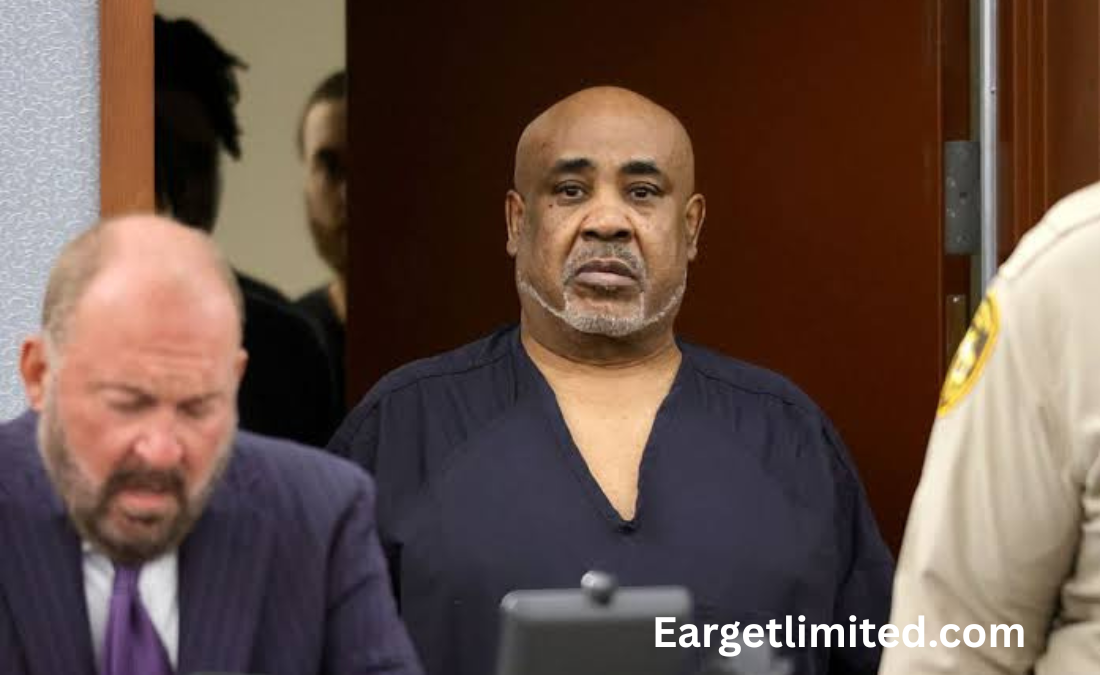
For nearly three decades, the murder of Tupac Shakur stood as one of American music’s most notorious unsolved crimes. That changed with the case against Duane Keith Davis, known on the street as “Keefe D” or “Keffe D,” a former Compton gang figure who spent years openly describing his own role in the killing before finally being arrested, tried, and convicted in 2026. This article lays out his background, the case built against him, the long road to trial, and the verdict that closed one of hip-hop’s longest-running mysteries.
Who Is Duane “Keefe D” Davis?
Duane Keith Davis is a former leader in the Southside Compton Crips with a criminal record that includes federal prison time on drug charges. He is the uncle of Orlando “Baby Lane” Anderson, a fellow Compton gang member long identified by investigators, and by Davis himself, as the person who fired the fatal shots. Anderson was never charged; he was killed in an unrelated Compton shootout in 1998 and denied any involvement in Shakur’s death while he was alive. Davis, by contrast, grew increasingly open about his own account over the years, most notably in his 2019 memoir “Compton Street Legend,” in which he admitted sitting in the front passenger seat of the white Cadillac the shots came from, and said he personally passed the gun back to the shooter in the rear seat.
The Night Tupac Shakur Was Killed
The shooting happened on the night of September 7, 1996, on the Las Vegas Strip. Shakur had attended a Mike Tyson fight at the MGM Grand earlier that evening with Death Row Records CEO Marion “Suge” Knight, and a physical altercation broke out in the hotel lobby afterward between members of Shakur’s entourage and Orlando Anderson. Later that night, while Knight was driving Shakur in a BMW near the Strip, a white Cadillac pulled alongside and gunfire erupted from the back seat, striking Shakur multiple times. He died of his injuries a week later, on September 13, 1996, at age 25. For 27 years, nobody was formally charged, even though Davis was widely known to investigators as one of the last surviving occupants of the Cadillac.
Years of Public Confessions
What eventually made prosecution possible was Davis’s own willingness to talk. In 2009, while facing separate drug charges, he reportedly gave a “proffer” confession to federal investigators describing his account of the killing, but the way it was structured meant it couldn’t legally be used against him at the time. Rather than staying quiet afterward, Davis went on to discuss his version of events repeatedly in television interviews, true-crime YouTube appearances, and his 2019 memoir. Retired LAPD detective Greg Kading, who investigated the case for years, has said it was precisely these public statements that eventually gave Las Vegas prosecutors enough leverage to build a case that had previously seemed unprosecutable.
Arrest and Indictment
That leverage turned into formal charges on September 29, 2023, when Davis, then 60, was arrested while out on a walk near his home in Henderson, Nevada. A Nevada grand jury, seated for several months, indicted him on one count of murder with use of a deadly weapon, along with a sentencing enhancement tied to alleged gang activity. Announcing the indictment, Chief Deputy District Attorney Marc DiGiacomo described Davis as the “on-ground, on-site commander” who ordered Shakur’s killing. Davis became the only person ever formally charged in the case.
Arraignment and Custody
Davis was arraigned on November 2, 2023, pleading not guilty before a Clark County judge, with his wife, son, and daughter present in the courtroom. Prosecutors confirmed they were not seeking the death penalty, meaning he faced life in prison if convicted, and public defenders were appointed after his attempt to hire private counsel fell through. Bail was later set at $750,000, with an unusual condition requiring Davis to prove the legitimate source of any funds used to post it, meant to stop him profiting from publicity to pay his own bail. He was unable to meet it and remained in custody at the Clark County Detention Center throughout the pretrial process, continuing to insist in jailhouse interviews that he was innocent and had not even been in Las Vegas that night.
Delays on the Way to Trial
The case took years to reach trial. Davis’s defense attempted to have the charges dismissed entirely, citing the enormous passage of time and alleged procedural issues, but that motion was denied. A trial expected in 2024 was pushed back, and a trial set for March 2025 was delayed again after his attorney argued in February 2025 that new evidence kept surfacing that needed more time to examine. The judge agreed, acknowledging the case’s unusual complexity, and pushed proceedings into 2026.
The Trial and Verdict
Davis’s trial finally opened in Las Vegas in mid-August 2026 and ran for roughly two weeks. Prosecutors called 25 witnesses over the first week and a half, trying to reconstruct events from nearly 30 years earlier, while acknowledging in court that physical evidence like DNA, fingerprints, and the murder weapon no longer existed, leaving much of their case resting on Davis’s own past public statements. Shortly before deliberations, prosecutors dropped the gang-related sentencing enhancement, citing witness logistics, leaving the jury to rule only on the core murder charge with the deadly-weapon enhancement. On August 31, 2026, after less than three hours of deliberation following an 11-day trial, the jury found Davis, then 63, guilty of first-degree murder with use of a deadly weapon. He remained largely composed as the verdict was read, briefly raising his fist toward the courtroom gallery, while members of Shakur’s family and friends embraced outside the courtroom.
Sentencing and What Comes Next
The judge scheduled Davis’s sentencing for October 13, 2026, and ordered him held without bond until then. He faces a maximum possible sentence of life in prison without the possibility of parole. Following the verdict, Davis indicated he intends to appeal the conviction, meaning the legal process is not entirely finished even though the trial itself has concluded.
Conclusion
Duane “Keefe D” Davis spent years in a strange public position: a self-admitted participant in one of music history’s most infamous unsolved killings, shielded for a long time by the legal quirks of an old confession, and seemingly comfortable discussing his version of events in books and interviews long before any charges were filed. That changed in September 2023, when Nevada prosecutors used his own public statements to finally bring him to court, and it reached its conclusion on August 31, 2026, when a Las Vegas jury convicted him of first-degree murder. With sentencing set for October and an appeal already promised, the case isn’t entirely closed — but for the first time in almost thirty years, someone has actually been held legally responsible for the killing that ended Tupac Shakur’s life at 25.