
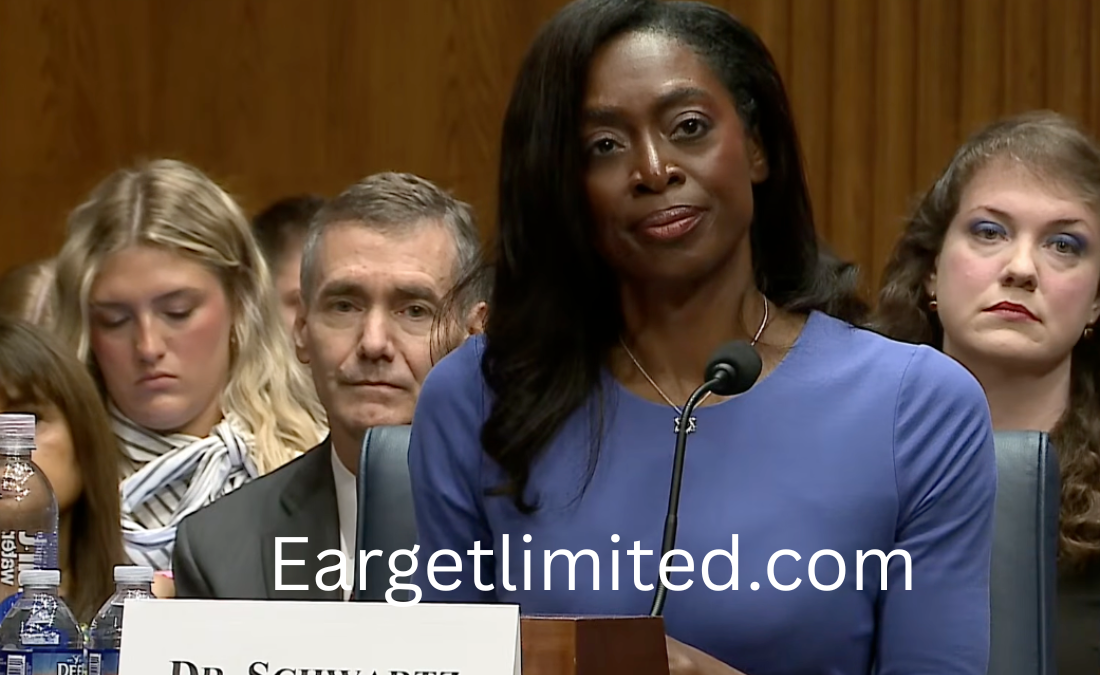
Who Is Dr. Erica Schwartz?
Dr. Erica Schwartz is a physician, retired rear admiral, and public health official who now serves as Director of the Centers for Disease Control and Prevention. Before taking that role in 2026, she spent nearly three decades in uniformed federal service, rising through the U.S. Navy and the U.S. Public Health Service Commissioned Corps to become Deputy Surgeon General of the United States. Her path to the CDC’s top job combined military medicine, legal training, corporate healthcare leadership, and a high-profile Senate confirmation process, all of which have made her one of the most discussed public health figures in the country this year.
Early Life and Education
Schwartz was raised in a military household. Her father served as a career Navy master chief petty officer stationed in San Diego, and three of her siblings also went on to serve in the armed forces, so a life of service was familiar to her from childhood. She carried that background into Brown University, where she entered the school’s eight-year Program in Liberal Medical Education in 1994. She earned a bachelor’s degree in biomedical engineering with a minor in East Asian studies and completed her medical degree in 1998, all while serving as a commissioned Navy officer whose service helped pay for her schooling. She later added a Master of Public Health from the Uniformed Services University of the Health Sciences and a Juris Doctor from the University of Maryland, giving her the MD, JD, and MPH credentials she holds today.
Military and Coast Guard Career
After completing her medical training, Schwartz served in the Navy until 2005 as an occupational medicine physician, working in clinics in Annapolis, Maryland and at the Navy and Marine Corps Public Health Center in Portsmouth, Virginia. In 2005 she transferred into the U.S. Public Health Service Commissioned Corps and began a long association with the U.S. Coast Guard, first as Chief of Preventive Medicine and later as Chief of Health Services at Coast Guard Headquarters in Washington, D.C. During this period she became the Coast Guard’s leading expert on flu pandemics and played an active role in the public health response to the 2010 Deepwater Horizon oil spill. In 2015 she was promoted to rear admiral and named the Coast Guard’s Chief Medical Officer, a position in which she oversaw dozens of clinics and sick bays and led work-life programs covering everything from child care to suicide prevention across the service.
Deputy Surgeon General of the United States
In 2019, just as she was preparing to retire, Schwartz was asked by then–Surgeon General Jerome Adams to become his deputy, and she accepted the post of Deputy Surgeon General. In that role she effectively ran day-to-day operations for the thousands of officers in the Public Health Service Commissioned Corps. Her tenure coincided with the COVID-19 pandemic, and she is credited with helping design the national system of drive-through testing sites that were rolled out across all fifty states, Puerto Rico, and Washington, D.C., ultimately supporting testing for millions of Americans. When the presidential transition from the first Trump administration to the Biden administration took place in early 2021, Schwartz served as the point of contact within the Department of Health and Human Services. She was not asked to continue as acting Surgeon General under the new administration and chose to resign shortly afterward, closing out twenty-seven years of combined military and public health service.
Career in the Private Sector
After leaving government service, Schwartz moved into private industry, becoming President of Insurance Solutions for Medicare and Retirement at UnitedHealthcare, a position she held for several years. During this time she also joined the boards of Aveanna Healthcare, a home care company, and Butterfly Network, a medical imaging technology firm, bringing her public health and regulatory experience into corporate healthcare leadership. She stepped away from these roles once she returned to federal service in 2026.
Nomination and Confirmation as CDC Director
By early 2026, the CDC had gone without a permanent director for nearly a year, following a period of turmoil that included the abrupt removal of a previous director amid disputes over vaccine policy. President Trump nominated Schwartz for the position in April 2026, praising her publicly as an exceptionally talented choice. Her nomination stood out because, unlike some previous candidates considered for the role, she brought a long record of supporting established vaccination programs and pandemic response work rather than vaccine skepticism, which drew praise from physicians and public health experts. Her Senate confirmation hearing in July 2026 was contentious, with senators from both parties questioning whether she would resist political pressure on vaccine policy from health leadership. She told the committee she would never compromise on the science, and after some adjustments to CDC materials addressed lingering concerns from the committee chairman, she secured enough support to move forward. The full Senate confirmed her in August 2026 by a vote that fell largely along party lines, making her the CDC’s first permanent, Senate-confirmed director in about a year.
Vaccine Stance and Public Health Priorities
Throughout her career, Schwartz has generally been viewed as a mainstream, science-driven public health figure rather than an ideological one. She has publicly supported routine childhood immunization programs and pledged during her confirmation process to lead with scientific integrity. At the same time, some lawmakers and public health advocates expressed concern that she did not offer firm, explicit commitments to publicly oppose political interference in vaccine guidance if it arose. Supporters countered that her decades of operational experience managing real public health emergencies, from pandemic flu planning to oil spill response to COVID-19 testing infrastructure, made her one of the most qualified candidates realistically available for the job.
Husband and Family Life
Dr. Schwartz is married to Dr. Daniel Schwartz, whom she met as a fellow medical student at Brown University; the two graduated in the same class in 1998. He went on to become a bioethics patent attorney, applying his medical background to legal work involving healthcare innovation and ethics. The couple has kept their family life largely private throughout Erica Schwartz’s public career, and while it is known that they have children together, specific details about their family have not been made public. Schwartz has spoken warmly about her husband’s steady support throughout her military service and government roles, but neither has given detailed public interviews about their marriage or home life.
Age, Background, and Personal Identity
Based on her known education and career timeline, Schwartz was born around 1971 or 1972, making her approximately fifty-four or fifty-five years old at the time of her CDC confirmation. She has spoken openly about her identity as an African American woman working in engineering and medicine, fields where she has said she rarely saw others who looked like her, and her appointment made her the first Black woman to lead the CDC. Beyond her own public comments on race, there is no publicly confirmed information about her religious background, and no reliable reporting addresses questions about her family’s faith.
Political Affiliation and Public Perception
Schwartz has not publicly identified with a political party, and no voter registration or personal statement on the matter is part of the public record. Her career reflects service under both Republican and Democratic administrations, which is typical for senior uniformed public health officials who are expected to serve regardless of which party controls the White House. Her nomination came from a Republican president, and her confirmation vote broke largely along party lines in the Senate, but that reflects how lawmakers viewed her nomination rather than any personal political affiliation she has claimed herself. Commentators have generally described her as a conventional, credentialed public health pick rather than a partisan or ideological one.
Conclusion
Dr. Erica Schwartz’s career traces a steady rise from a military family in San Diego to one of the most closely watched positions in American public health. Her professional record, from Navy medicine and Coast Guard leadership to the Deputy Surgeon General’s office and now the CDC directorship, is thoroughly documented and reflects decades of hands-on public health experience. Her personal life, including her marriage to Dr. Daniel Schwartz and her family, has remained comparatively private, and important details about her religion and political leanings simply are not part of the public record. What is clear is that she arrives at the CDC as an experienced, credentialed physician tasked with restoring stability to an agency that has faced significant turbulence in recent years.